Tilbake til forsiden

Publisering

Top 10 Most Iconic Buildings in the World

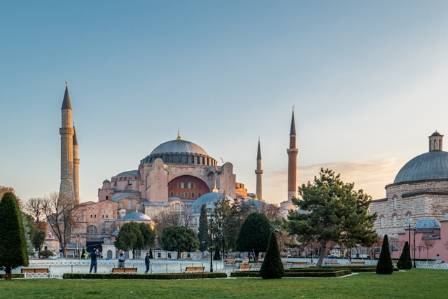
Hagia Sophia stands on the site of a 4th-century church—of which no trace remains—and has long been a focal point in Istanbul (formerly Constantinople). Today, this grand structure operates as a museum, but its role has shifted over time: for centuries, it served as a core site of the Greek Orthodox Church, later transforming into an Islamic mosque.

E

Ella Scott

Signatur

Top 10 Most Iconic Buildings in the World

Hagia Sophia

Hagia Sophia  stands on the site of a 4th-century church—of which no trace remains—and has long been a focal point in Istanbul (formerly Constantinople). Today, this grand structure operates as a museum, but its role has shifted over time: for centuries, it served as a core site of the Greek Orthodox Church, later transforming into an Islamic mosque. The second church on this spot was destroyed by fire during the Nika Riots in 532, though small remnants can still be seen today. The Hagia Sophia we know now was constructed between 532 and 537 and ranks among the finest surviving examples of Byzantine architecture. Its biggest draw is the stunning dome, which measures 102 feet in diameter and soars 182 feet into the sky. Other striking features include countless mosaics, the Loge of the Empress, the Marble Door, the Sultan’s Lodge, Mahmut I’s Library, and the Marble Jars.

The Louvre

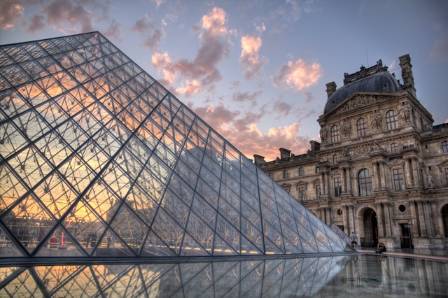
One of the world’s most recognizable museums, the Louvre’s palace—plus its later-added glass pyramid—is just as visually striking to visitors as the priceless artworks it houses. Yet it wasn’t always a museum: originally built in the 12th century as a fortress, it was converted into a royal residence in the 14th century. In 1750, Louis XV transformed it back into a royal museum to showcase parts of the royal art collection. During the French Revolution, it underwent another shift, becoming a public museum. Over the years, Napoleon I expanded the Louvre, while Louis XVIII and Charles X oversaw restorations. Today, the Louvre holds 380,000 artifacts, with 35,000 on public display—including iconic works like The Mona Lisa and The Venus de Milo

The Burj Al Arab

In a city renowned for its bold architecture, the Burj Al Arab defines Dubai’s skyline. As the newest structure on this list—built on a grand scale—it was completed in 1994 and ranks among the world’s most luxurious hotels. Perched on a man-made island in the Persian Gulf, its design mimics the sail of a traditional dhow boat. The hotel boasts a 590-foot-tall atrium, a large seawater aquarium, two restaurants (one of which was named among the top 10 in the world by Condé Nast), and 202 opulently furnished suites.

Sydney Opera House

Rising from Sydney Harbour, the Sydney Opera House is not only the heart of Australia’s arts scene but also a must-see landmark for anyone visiting the region. In the late 1940s, Eugene Goossens—Director of the NSW State Conservatorium of Music—advocated for a new venue to host large-scale performances. In 1955, NSW Premier Joseph Cahill launched a design competition, and construction began in 1958. The winning design features a series of concrete shells and houses multiple performance spaces: a concert hall, an opera theater, a drama theater, a studio, the Utzon Room, a forecourt, plus a recording studio, five restaurants, four souvenir shops, and a guided tour service.

Empire State Building

Once the tallest building in the world, this grand Art Deco skyscraper is a staple in films and TV shows set in New York. Originally located on the site of the Waldorf-Astoria Hotel, construction began on St. Patrick’s Day in 1930. After 410 days, the building was finished, claiming the title of “world’s tallest”—surpassing both 40 Wall Street and the Chrysler Building, which were under construction around the same time. Its opening coincided with the Great Depression, leaving it nearly empty for the next 20 years. The building has faced other challenges too: a 1945 plane crash, shootings in 1997, and over 30 suicides. Yet through it all, the Empire State Building has endured as a timeless symbol of New York City.

Taj Mahal

India’s crowning jewel, the Taj Mahal is a testament to one man’s love for his wife. Though it resembles a palace, it was actually built as a tomb for an emperor’s favorite spouse. Construction began one year after her death in 1632; the mausoleum was completed in 1648, while the surrounding buildings and gardens took another five years to finish. The project employed 20,000 workers and craftsmen recruited from across northern India. Soon after the Taj Mahal’s completion, the emperor was deposed by his son Aurungzeb and placed under house arrest. When the emperor died in 1658, he was buried beside his wife inside the Taj Mahal. During World War II, the Indian government erected scaffolding around the Taj to mislead German and Japanese bomber pilots. Today, the monument faces a new threat: acid rain and pollution from the Mathura Oil Refinery have started to turn its white marble yellow.

Eiffel Tower

Towering over Paris, the Eiffel Tower was built between 1887 and 1889 to serve as the entrance arch for the Exposition Universelle—a event marking the centennial of the French Revolution. Initially, the tower was only meant to stand for 20 years, but its value as a communication tool saved it, making it a permanent, unmissable part of Paris’s skyline (especially since buildings in the city are restricted to seven stories). During Germany’s occupation of Paris in World War II, the lift cables were cut, forcing German soldiers to climb the stairs to the top to raise the swastika. Within hours of Paris’s liberation, the lifts were operational again.

Big Ben

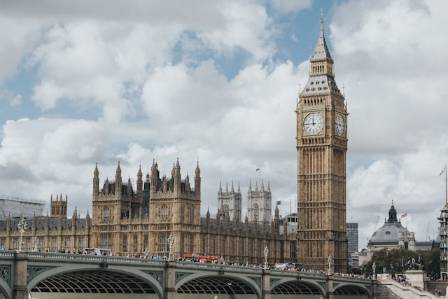
One of the world’s most famous clocks, “Big Ben” technically refers to one of the bells inside the tower—but over time, the name has come to describe both the clock and the tower itself. It was completed during the restoration of the Palace of Westminster in 1858. The tower stands 316 feet tall, each clock face is 23 feet square with 4-foot-tall numbers, and the great bell is 7.5 feet tall and weighs 13 tons. No one knows for sure who “Big Ben” is named after, but popular theories point to Sir Benjamin Hall (who oversaw the bell’s installation) or Benjamin Count, an English heavyweight boxing champion.

The Colosseum

The largest amphitheater ever built by the Romans, the Colosseum is one of Ancient Rome’s greatest architectural achievements. Construction began between 70 and 72 AD and finished in 80 AD. It could seat 50,000 people and was primarily used for gladiatorial contests, but also hosted public spectacles: mock sea battles, animal hunts, executions, battle reenactments, and dramas based on Classical mythology. During the medieval era, its role as an entertainment venue ended, and it was repurposed as housing, workshops, a fortress, a quarry, quarters for a religious order, and a Christian shrine. Today, the Colosseum is one of Rome’s most popular tourist attractions, drawing thousands of visitors annually.

The Giza Pyramids

The oldest structures on this list, the pyramids on the Giza Plateau have fascinated humanity for centuries. Not only have they stood the test of time, but their precision is impressive even by modern standards. They were built as tombs for three different pharaohs during the Third and Fourth Dynasties. The Giza Pyramids are also the only surviving wonder of the ancient world—and held the title of “tallest building in the world” until 1300, when England’s Lincoln Cathedral surpassed them. Despite their long history (or perhaps because of it), mysteries have surrounded the pyramids since they were first documented by the Ancient Greeks thousands of years ago: How were they built? How many people worked on them? How long did construction take? What knowledge of astronomy, mathematics, and geography did the Egyptians possess? Even wild questions like “Did aliens assist in their construction?” persist. While these questions remain unanswered, all we can do is marvel at a civilization that mastered advanced building techniques even before the invention of the wheel.

Andre saker du kanskje liker

Volkswagen Beetle Evolution: History & Highlights

Volkswagen Beetle Evolution: History & Highlights

Some products go far beyond what their creators originally imagined—and the Volkswagen Beetle is a perfect example. When it was introduced in 1938, few could have predicted that it would grow into one of the most recognizable automobiles ever made. More than eight decades later, it stands as a global icon, with over 23 million units produced.

AAva Taylor
The Fundamental Principles of Men’s Casual Attire

The Fundamental Principles of Men’s Casual Attire

Establishing a robust collection of foundational garments makes curated dressing a much simpler task. Once you have secured the essential pieces, you can choose to introduce unique items or remain committed to timeless aesthetics. Perfecting the art of casual wear is straightforward when focusing on the right elements. This manual is designed for the modern man seeking to master everyday style, specifically excluding formal suits and professional corporate wear. After identifying your preferred silhouettes for shirts and trousers, the process simply becomes a matter of strategic coordination.

KKatherine Louise Thornton
Hand Embroidery for Beginners

Hand Embroidery for Beginners

If you’ve been wanting to learn embroidery but don’t know how to begin, you’re exactly where you need to be. Through my embroidery tutorials and blog posts—many of which have reached millions of viewers—I’ve helped people worldwide discover this craft. Embroidery is my favorite creative outlet, and I’ve organized everything you need to know into a series of beginner-friendly lessons. With just a handful of tools and a few simple stitches, you’ll be able to create beautiful designs sooner than you think.

PParker Coast
Sushi: Nutritious or Not?

Sushi: Nutritious or Not?

Sushi is often praised for its nutritional value, offering a variety of health benefits. Yet, it’s not without concerns—especially when considering sodium levels, potential contaminants, and mercury exposure. Let's explore its health implications in detail.
CClara Jennings
Longan: The Exotic "Dragon Eye" of Southeast Asia

Longan: The Exotic "Dragon Eye" of Southeast Asia

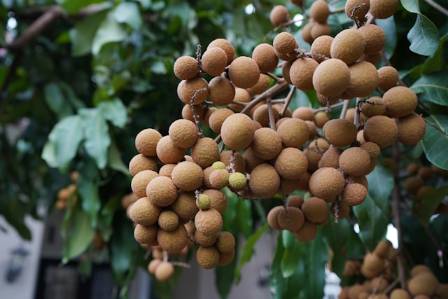
The longan is a small, tropical fruit renowned for its succulent texture and delicate, floral sweetness. Characterized by a thin, bark-like shell and a single dark seed, this fruit has been a cornerstone of Asian culinary and medicinal traditions for millennia. Beyond its unique flavor profile, the longan is prized for its hardy nature, with trees capable of thriving for several centuries.

EEvan Lockwood
Modern Minimalism: A Guide to Creating Your Own Color Block Wall Art

Modern Minimalism: A Guide to Creating Your Own Color Block Wall Art

Transforming a sterile, blank wall into a vibrant focal point doesn't have to be expensive or overly complicated. When faced with the challenge of decorating a multi-purpose room—such as a combined home office and nursery—the goal is to find a design that offers professional inspiration while remaining soft enough for a child's space. A custom color block painting on a wooden panel provides the perfect balance of bold hues and clean, modern lines.

VVanessa Marie Stratford
5 Distinct Advantages of Consuming Coffee

5 Distinct Advantages of Consuming Coffee

The benefits of coffee extend far beyond just providing a quick energy boost. Alongside its ability to invigorate the mind and body, a daily intake of coffee has been associated with numerous health advantages, including a reduced risk of type 2 diabetes and depression, aid in weight management, and potential for extending lifespan. However, it's essential to be mindful of the recommended caffeine limits, especially during pregnancy or while nursing.

BBenjamin Cole
The Profound Influence of Technology on Your Everyday Life

The Profound Influence of Technology on Your Everyday Life

In the year 2023, technology permeates nearly every facet of our daily existence, ushering in a multitude of transformations across various domains. From the realms of transport efficiency, food accessibility, and healthcare to socialization, productivity, and the ease of learning, technology has left an indelible imprint on our world. It has not only made knowledge more accessible but has also fostered the organic formation of global communities on the internet.

EEthan Ryder
Comprehensive Guide to Artistic Painting on Feathers

Comprehensive Guide to Artistic Painting on Feathers

Feathers offer a remarkable and unconventional medium for artists, serving as both a naturally beautiful object and a versatile canvas for creative expression. Whether you are illustrating realistic wildlife or abstract patterns, painting on feathers requires a specific set of techniques to handle the delicate texture of the quills while ensuring a lasting finish.

SSebastian Cole Whitaker
13 Best Places to Stargaze in the US with Naked Eyes

13 Best Places to Stargaze in the US with Naked Eyes

For much of the world’s population, including most Americans, the night sky has lost its brilliance. Artificial light pollution has dulled the once-vibrant celestial canvas, making the Milky Way invisible to more than two-thirds of U.S. residents.

AAmy