Tilbake til forsiden

Publisering

What Is a Rocket?

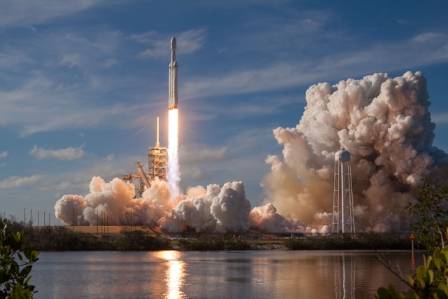
The word “rocket” is full of excitement and wonder—for kids and grownups alike! But what does it really mean? Most of the time, when we hear “rocket,” we picture a tall, slim, round vehicle soaring high into the sky, breaking through clouds to reach space. But did you know “rocket” can also refer to a special kind of engine? Or even the vehicle that uses that engine to fly? Whether it’s a tiny model rocket you launch in a park, a colorful firework lighting up the night sky, or a giant NASA rocket carrying astronauts to the moon, all these things share the same basic idea: they use power to shoot forward, even into the endless darkness of space. Let’s dive into the amazing world of rockets and discover how they work, where they came from, and what NASA does with them—plus what’s next for these incredible machines!

N

Noah Thompson

Signatur

What Is a Rocket?

The word “rocket” is full of excitement and wonder—for kids and grownups alike! But what does it really mean? Most of the time, when we hear “rocket,” we picture a tall, slim, round vehicle soaring high into the sky, breaking through clouds to reach space. But did you know “rocket” can also refer to a special kind of engine? Or even the vehicle that uses that engine to fly? Whether it’s a tiny model rocket you launch in a park, a colorful firework lighting up the night sky, or a giant NASA rocket carrying astronauts to the moon, all these things share the same basic idea: they use power to shoot forward, even into the endless darkness of space. Let’s dive into the amazing world of rockets and discover how they work, where they came from, and what NASA does with them—plus what’s next for these incredible machines!

How Does a Rocket Engine Work?

Just like the engine in a car or a bike (but way more powerful!), rockets need fuel to run. Most rocket engines work by burning fuel and turning it into super-hot gas. Imagine holding a balloon full of air and letting it go—air rushes out the tiny opening, and the balloon zips around the room. That’s a little like how a rocket engine works! The engine pushes all that hot gas out its back end as fast as it can, and that push sends the rocket zooming forward.
But rockets are different from jet engines (the ones on airplanes) in a super important way: jets need air to work. Planes fly in Earth’s atmosphere, where there’s plenty of air to help their engines burn fuel. But rockets? They don’t need any outside air at all! They carry everything they need—fuel and oxygen—right on board. That’s why rockets can work in space, where there’s no air at all. Isn’t that cool?
There are two main types of rocket engines: liquid fuel and solid fuel. Liquid fuel rockets use fuel that’s in a liquid state, like gasoline but much more powerful. The space shuttle’s main engines used liquid fuel, and Russia’s Soyuz rockets (which still take astronauts to the International Space Station today) also use liquid fuels. Solid fuel rockets, on the other hand, use fuel that’s hard, like a big candle or a stick of dynamite (but safer!). The two white “boosters” on the side of the space shuttle were solid fuel rockets—once they ignited, they burned all their fuel and fell off the shuttle mid-flight. Fireworks and most model rockets you can buy are also solid fuel rockets—light the fuse, and off they go!

Why Does a Rocket Work?

Have you ever wondered: if there’s nothing in space to push against, how do rockets move there? It’s all thanks to a scientific rule called Newton’s Third Law of Motion. A smart scientist named Sir Isaac Newton came up with this rule over 300 years ago, and it’s still true today! The law says: “For every action, there is an equal and opposite reaction.” Let’s break that down in kid-friendly words.
When a rocket burns fuel, it pushes the hot gas backward (that’s the “action”). In response, the gas pushes the rocket forward (that’s the “equal and opposite reaction”). It’s like when you stand on a skateboard and throw a heavy ball forward—you’ll feel a push backward, and the skateboard will roll in the opposite direction of the ball. The ball moves forward (action), and you move backward (reaction). Because you’re heavier than the ball, you won’t move as far—but the same idea applies to rockets! The rocket pushes gas backward with a huge force, and the gas pushes the rocket forward with just as much force, even in space where there’s nothing else around.
You can test this at home! Blow up a balloon and pinch the opening shut. Hold the balloon in front of you and let go—what happens? The air rushes out the back (action), and the balloon flies forward (reaction). That’s Newton’s Third Law in action, and it’s exactly how rockets move—whether they’re zooming through Earth’s sky or deep into space!

When Were Rockets Invented?

Rockets aren’t a new invention—people have been using them for hundreds of years! The first rockets we know about were created in China around the 1200s. These early rockets were simple: they used solid fuel (like gunpowder) and were mostly used for fireworks to celebrate special occasions. But armies also realized how useful rockets could be—they used them as weapons to shoot at enemy troops.
For the next 700 years, people kept improving rockets. They made them bigger, faster, and more powerful, and many were still used in wars. But it wasn’t until the 20th century that rockets started being used to explore space. In 1969, the United States made history with the Saturn V rocket—the tallest, heaviest, and most powerful rocket ever built at the time. The Saturn V carried three astronauts (Neil Armstrong, Buzz Aldrin, and Michael Collins) to the moon, and Neil Armstrong became the first person to step on the moon’s surface. That’s one of the most famous moments in rocket history, and it showed the world just how amazing these machines can be!

How Does NASA Use Rockets?

NASA (the National Aeronautics and Space Administration) is the U.S. agency that explores space, and rockets are their most important tool. In the early days of NASA (the 1950s and 1960s), the agency used rockets that were originally built for the military. For example, Alan Shepard—the first American in space—flew on a Redstone rocket, which was designed by the U.S. Army. John Glenn, the first American to orbit Earth, flew on an Atlas rocket, another military-designed rocket.
Later, NASA built its own rockets to carry astronauts. The Saturn I, Saturn IB, and Saturn V rockets were used for the Apollo missions, which sent 12 astronauts to the moon between 1969 and 1972. The Saturn V also launched Skylab, America’s first space station, into orbit in 1973. Then came the space shuttle—a reusable rocket that flew from 1981 to 2011. The space shuttle had three main parts: the orbiter (the plane-like part that carried astronauts and cargo), two solid rocket boosters, and an external fuel tank. It was the first rocket that could be used again and again, making space travel more affordable.
But NASA doesn’t just use rockets for astronauts. They also launch satellites into space with rockets—satellites that help us forecast the weather, watch TV, use GPS on our phones, and study Earth’s oceans, forests, and climate. NASA also sends probes (unmanned spacecraft) to other planets and moons using rockets. Probes like Voyager, Mars rovers (like Perseverance), and New Horizons (which visited Pluto) all started their journeys on rockets like the Atlas V, Delta II, Pegasus, or Taurus. And for small scientific experiments, NASA uses “sounding rockets”—these are small rockets that go up high (sometimes 100 miles or more!) to collect data, then fall back to Earth without going into orbit.

How Will NASA Use Rockets in the Future?

NASA is always working on new and better rockets for future space missions. The next generation of rockets won’t look like the space shuttle—instead, they’ll look more like the tall, slim rockets of the past, like the Saturn V. These new rockets are being designed to carry astronauts back to the moon, and eventually to Mars!
One of NASA’s new rockets is called the Space Launch System (SLS)—it’s a heavy-lift vehicle, which means it can carry huge loads into space. The SLS will be able to carry astronauts in the Orion spacecraft (a new capsule designed for deep space travel) to the moon, where NASA plans to build a small space station called Gateway. Gateway will be a “pit stop” for astronauts on their way to the moon’s surface and eventually to Mars.
These new rockets will also carry supplies to the International Space Station (ISS), which has been orbiting Earth since 1998. And in the future, they might even send humans to Mars—NASA’s goal is to land the first person on Mars by the 2030s! Imagine watching a rocket launch that carries astronauts to another planet—how amazing would that be?
Rockets have come a long way since the 1200s, from simple fireworks to space exploration machines. And with new technology, the best is still to come. Who knows—maybe one day you’ll be part of building a rocket that goes to Mars, or even farther into the universe!

Andre saker du kanskje liker

Hand Embroidery for Beginners

Hand Embroidery for Beginners

If you’ve been wanting to learn embroidery but don’t know how to begin, you’re exactly where you need to be. Through my embroidery tutorials and blog posts—many of which have reached millions of viewers—I’ve helped people worldwide discover this craft. Embroidery is my favorite creative outlet, and I’ve organized everything you need to know into a series of beginner-friendly lessons. With just a handful of tools and a few simple stitches, you’ll be able to create beautiful designs sooner than you think.

PParker Coast
Embarking on Dreams: The Unique Appeal of New York City for Students

Embarking on Dreams: The Unique Appeal of New York City for Students

New York City, hailed as the greatest metropolis on earth, emerges not only as a global hub but also as an unparalleled educational haven. For students seeking a college education, NYC stands out as the quintessential choice, offering a myriad of opportunities that transcend traditional academic landscapes.
CChloe Elise
Los coches deportivos más emblemáticos de todos los tiempos

Los coches deportivos más emblemáticos de todos los tiempos

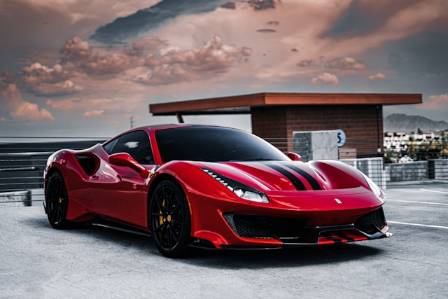
Los propietarios de coches deportivos actuales tienen innumerables razones para elegir los vehículos de sus sueños. Algunos están obsesionados con el profundo rugido de un potente motor cuando acelera, mientras que otros prefieren la agilidad y la maniobrabilidad de los coches deportivos a los sedanes y los SUV.

SSilvia Martínez
Elephant

Elephant

Have you ever “herd” about them? Elephants are enormous, intelligent, strong, and highly social. For centuries, humans have been fascinated by their sheer size—a male African elephant can reach up to 7.5 tons (6.8 metric tons)! Beyond their massive bodies, elephants captivate us with their long, versatile trunks, enormous flapping ears, and loose, wrinkled skin. Stories about these majestic animals abound—you may recall Horton, Babar, or Dumbo.

JJulian Cross
Suggestive Mountions Huts in 7 Areas

Suggestive Mountions Huts in 7 Areas

Mountain huts, also known as alpine huts, mountain shelters, or mountain lodges, are structures situated in high mountainous regions, typically accessible only by foot. Their primary purpose is to provide food and shelter for mountaineers, climbers, and hikers. These huts are commonly managed by Alpine Clubs or organizations dedicated to mountain recreation.

EEvelyn
Top 10 Farm Animals: A Playful Ranking of Agricultural Companions

Top 10 Farm Animals: A Playful Ranking of Agricultural Companions

Dear readers, indulge me as I present to you a whimsical exploration of farm animals, each with its unique charm and quirks. Let's embark on this lighthearted journey together!

YYasmin
Crucial Insights for Your Amman, Jordan Adventure

Crucial Insights for Your Amman, Jordan Adventure

A visit to Jordan often begins with a landing at Amman's international airport. When planning your Jordan adventure, a key question arises: should you explore the city of Amman itself?

JJackson Miles
The Comprehensive Guide to Modern Necklaces

The Comprehensive Guide to Modern Necklaces

Necklaces represent a profound form of self-expression, transcending their role as mere accessories to become central pillars of personal style. The sheer diversity of available designs—ranging from minimalist chokers to sophisticated pendants—ensures that there is a piece to complement every ensemble. By exploring various metals, artistic elements, and gemstone accents, you can discover jewelry that perfectly mirrors your unique aesthetic. This guide explores the dynamic world of necklaces and their ability to enhance both everyday and formal attire.

VVictoria Claire Harrington
Finding the Ideal Sunglasses: A Guide to Face Shapes, Personal Style, and Functionality

Finding the Ideal Sunglasses: A Guide to Face Shapes, Personal Style, and Functionality

Selecting the perfect pair of sunglasses involves more than just picking a trendy design. The most suitable eyewear should harmonize with your facial structure, reflect your aesthetic preferences, and satisfy your daily requirements—all while providing essential UV protection. This guide outlines a straightforward approach to identifying your face shape, selecting flattering frames, choosing the right colors, and determining which lens technology best supports your lifestyle. By following these steps, you can invest in eyewear that provides both confidence and comfort throughout the year.

CClarence Winslow
The 7 Most Stunning Buses Around the World

The 7 Most Stunning Buses Around the World

Exploring the Most Beautiful Buses Ever Built Buses aren't just about transportation—they can be marvels of design and innovation. Some buses stand out for their exceptional aesthetics, blending functionality with artistic style. From futuristic designs to vintage masterpieces, here’s a list of the seven most visually striking buses from around the globe.

WWilliam