Publisering
Robots for Fabricated Metals and Manufacturing
FANUC America is a global leader in robotic solutions for metal fabrication, excelling in applications such as arc welding, laser welding and cladding, thick-section resistance welding, friction spot joining, plasma cutting, and laser cutting. Their offerings include both ready-made solutions and fully customized turnkey systems.
Nora Bennett
Signatur

FANUC America is a global leader in robotic solutions for metal fabrication, excelling in applications such as arc welding, laser welding and cladding, thick-section resistance welding, friction spot joining, plasma cutting, and laser cutting. Their offerings include both ready-made solutions and fully customized turnkey systems.
FANUC combines proven reliability with innovative automation to help metal fabricators increase productivity, reduce costs, and optimize operations. Their robots and CNC systems are designed to thrive in harsh manufacturing environments, including dusty or high-vibration settings, delivering consistent performance even in the toughest shops.
Whether serving a large-scale metal fabrication facility or a small job shop, FANUC and its Authorized System Integrators provide dependable, high-performance robotic automation along with industry expertise to solve complex production challenges. Customers benefit from solutions that are reliable, cost-efficient, and easy to implement, tailored to their unique metal processing requirements.
CNC Machines for Metal Fabrication
CNC (Computer Numerical Control) machines offer precision and speed that surpass manual methods. FANUC provides a range of CNC solutions designed to maximize performance, accuracy, and dependability for metal fabrication operations.
Advanced Machining
High-Performance Machining
General Applications
Laser Applications
Data Analytics and Programming Tools
Robotic Solutions for Metal Manufacturing
FANUC’s robotic systems support a wide variety of metalworking applications, including:
Arc Welding: Robots equipped with ArcTool software and sensors ensure high-quality, consistent welds while increasing productivity.
Spot Welding: Automation enables precise and repeatable welds, improves efficiency, and accesses hard-to-reach areas while saving shop floor space.
Cutting: Robots deliver high-accuracy, high-speed cuts for sheet metal fabrication and other cutting tasks.
Forming & Assembly: Automated robots shape and assemble sheet metal into components and finished products with consistency.
Machine Tending: Robots streamline tasks such as part removal, tool changes, sorting, cleaning, and inspection to keep production lines running efficiently.
Material Handling: Robots safely move heavy or awkward materials, reducing physical strain and saving time.
Inspection & Measurement: Automated vision systems ensure quality control, providing faster and more reliable measurements.
Surface Treatment & Finishing: Tasks like grinding, sanding, deburring, and polishing are performed precisely and repeatedly, improving product quality and eliminating health hazards.
Impact of Metal Fabrication Robots
Automating key processes in metal fabrication helps manufacturers achieve:
Enhanced precision and repeatability
Faster production with lower labor requirements
Reduced waste and material costs
Safer work environments for employees
Sheet Metal Fabrication is a cornerstone process, transforming raw metal sheets into finished parts through cutting, forming, and assembly. Automation improves efficiency, reduces material waste, and ensures consistent results.
Industries Benefiting from Automated Metal Fabrication
Aerospace: Precision is critical for structural components, where automation ensures consistency and reliability.
Automotive: Robots and CNC systems handle assembly, prototyping, and production of vehicle parts with high accuracy.
Alternative Energy: Solar panels, wind turbines, and corrosion-resistant pipes benefit from automated fabrication.
Medical Devices: Small, precise components are manufactured reliably with robotic assistance.
Agriculture: Equipment and parts for planting, harvesting, and transportation can be fabricated efficiently.
Construction & Defense: Robots assist in producing structural components and specialized metal products.
Advantages of FANUC Automation
Integrating FANUC robots and CNC machines into metal fabrication operations offers numerous benefits:
Safety: Automation reduces the risk of injury by handling repetitive, hazardous, or heavy tasks.
Efficiency & Speed: Robots perform tasks faster than humans while maintaining consistent quality.
Precision & Accuracy: CNC and robotic systems reduce errors, improving product quality.
Consistency & Repeatability: Automated processes produce uniform results across large production runs.
Cost Savings: Reduced material waste and labor costs improve the bottom line.
Data Insights: Integrated software solutions provide operational analytics to monitor efficiency and identify improvements.
By leveraging FANUC’s robotic and CNC solutions, metal fabrication shops—from small workshops to large industrial facilities—can achieve higher productivity, safer operations, and superior product quality. Automation allows employees to focus on complex, value-added tasks while machines handle repetitive and hazardous work, creating a more efficient and sustainable manufacturing process.
Andre saker du kanskje liker

Sushi: Nutritious or Not?
Sushi is often praised for its nutritional value, offering a variety of health benefits. Yet, it’s not without concerns—especially when considering sodium levels, potential contaminants, and mercury exposure. Let's explore its health implications in detail.

Effects on Your Body When You Increase Fruit and Vegetable Intake
Within the realm of nutrition, debates abound about what's truly beneficial or detrimental. However, one consensus prevails: a call to incorporate more fruits and vegetables into our diets. You don't need to be a math whiz to grasp the notion of consuming five daily servings of fruits and veggies, but do you know what this recommendation truly entails?

An Overview of Egrets: Biology and Conservation
Egrets are prominent wading birds belonging to the Ardeidae family, closely linked to herons. Within the biological hierarchy, they fall under the kingdom Animalia, phylum Chordata, and the class Aves. Taxonimically, they are categorized within the order Ciconiiformes, consisting of 11 distinct species distributed across four specific genera.

6 Health Benefits of Outdoor Activities
In today's fast-paced world, the simple act of stepping outside can do wonders for your physical, mental, and emotional well-being. The healing touch of nature offers a multitude of health benefits that are often overlooked in our daily routines. Here are some compelling reasons why spending time outdoors should be a priority in your lifestyle:
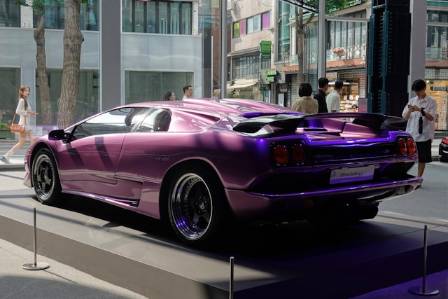
What is the Fastest Coupe in the World?
For automotive enthusiasts seeking the ultimate in performance, one question consistently arises: what represents the pinnacle of coupe engineering in terms of pure speed? While automotive technology continues to evolve at a remarkable pace, several current production models stand out for their extraordinary performance capabilities. Explore the world's fastest coupes and their breathtaking acceleration statistics.

4 Things You Must Know About Black-Billed Magpies
Black-billed Magpies bring considerable life to western North American scenery—not only with their striking looks, but also through their large, bushel-basket-like nests built in trees.
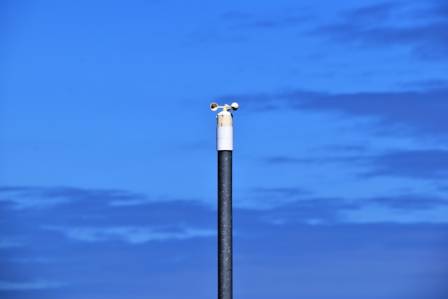
Catching the Wind: How Anemometers Measure Air Movement
The word anemometer may sound complex, but its purpose is quite straightforward—it measures wind. Derived from Greek roots, “anem-” means wind, while “-meter” simply means to measure. These instruments appear in weather stations everywhere, from small backyard setups to large-scale meteorological centers. By capturing details about air movement, they help us predict storms, plan outdoor activities, and even understand global climate patterns.

The Epic Story of Magnetic Tape: Past, Present and Future
Imagine a world with no way to preserve voices, music, or digital knowledge. Without magnetic tape, countless speeches, cultural treasures, and scientific breakthroughs might have vanished. This unassuming strip of coated plastic reshaped the way humans record, store, and protect information—and its journey is nothing short of extraordinary.

An Introductory Guide to Floral Painting with Water-Mixable Oils
Transitioning from the delicate nature of watercolors to the substantial world of oil painting offers a unique opportunity to explore texture and depth. While traditional oils are known for their heavy consistency and distinct scent, water-mixable oils provide a versatile alternative that maintains the rich qualities of the medium while allowing for easier cleanup. This guide explores the experimental journey of capturing a botanical scene by embracing the specific strengths of the oil medium.
Autonomous Mobility with Robotic Arms
Deep Robotics is reshaping intelligent mobility through Arm-powered physical AI robots designed for real-world applications.