Publisering
7 Things You Need to Know Before Visiting Frankfurt’s Deutsche Bank Twin Towers
The Deutsche Bank Twin Towers, also known as Deutsche Bank Headquarters (German: Zwillingstürme der Deutschen Bank or Hauptverwaltung Deutsche Bank AG) rise prominently in Frankfurt’s Bankenviertel, serving not only as the headquarters of Germany’s largest financial institution but also as enduring symbols of the city’s modern identity. Since their completion in 1984, these mirrored giants—fondly called “Debit and Credit” by locals—have reflected both the economic strength and architectural ambition of Germany’s financial capital.
Allan
Signatur
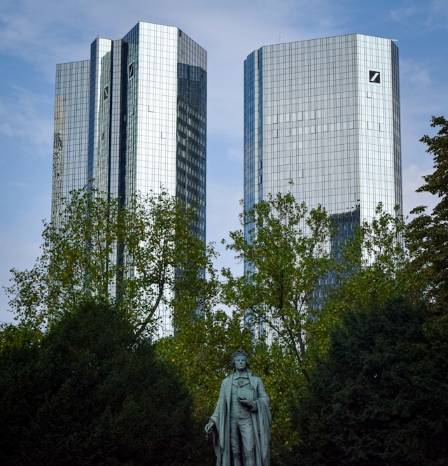
The Deutsche Bank Twin Towers, also known as Deutsche Bank Headquarters (German: Zwillingstürme der Deutschen Bank or Hauptverwaltung Deutsche Bank AG) rise prominently in Frankfurt’s Bankenviertel, serving not only as the headquarters of Germany’s largest financial institution but also as enduring symbols of the city’s modern identity. Since their completion in 1984, these mirrored giants—fondly called “Debit and Credit” by locals—have reflected both the economic strength and architectural ambition of Germany’s financial capital.
Historical Background
Deutsche Bank was founded in Berlin in 1870 with a mission to support international commerce. After the Second World War, Frankfurt emerged as West Germany’s new financial hub, prompting the bank to relocate. This move cemented the city’s role as Europe’s economic powerhouse and paved the way for the creation of a landmark headquarters befitting its new status.
Design and Construction
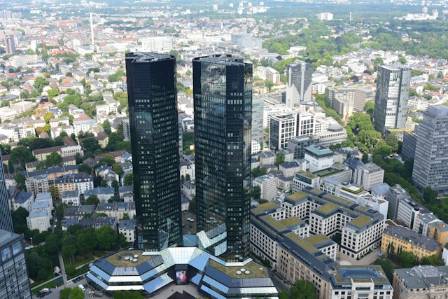
Plans for the twin towers began in the late 1970s, during Frankfurt’s rapid modernization. Architects Walter Hanig, Heinz Scheid, and Johannes Schmidt envisioned two identical skyscrapers, each soaring 155 meters with 40 floors. Completed in 1984, the sleek towers are joined by a common base and strategically aligned to maximize daylight and reduce visual overlap. Their reflective glass-and-steel façades embody balance and stability, qualities central to the banking industry.
Architectural Symbolism
Minimalist in style yet rich in meaning, the Twin Towers are regarded as icons of late modernism. Their twin nature represents transparency and trust, while the mirrored surfaces echo the constant interplay of tradition and innovation. The local nicknames “Debit” and “Credit” emphasize their connection to the dual foundations of global finance.
Green Transformation
Between 2007 and 2011, the towers underwent a €200 million sustainability upgrade led by Mario Bellini Architects and gmp von Gerkan, Marg und Partner. The renovation achieved dramatic results: a 55% reduction in energy use, 74% drop in water consumption, 67% decrease in heating demand, and nearly 90% cut in CO₂ emissions. These achievements earned the towers LEED Platinum and DGNB Gold/Platinum certifications, placing them among Europe’s greenest skyscrapers.
Visiting Information
Although primarily used as corporate offices, the towers can be admired from outside at any time. Guided tours of the Deutsche Bank Art Collection are sometimes available, usually on select days and free of charge with advance booking. During citywide cultural events such as the “Long Night of Museums,” public access may also be granted. The complex is fully accessible, with ramps and elevators for visitors with mobility needs.
Art and Culture
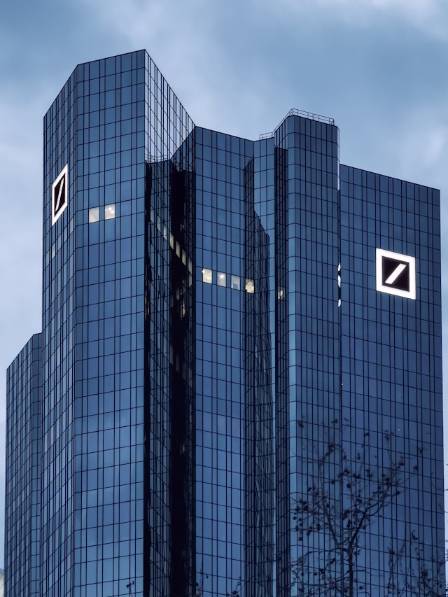
The towers host one of the world’s largest corporate art collections, spread across more than 60 floors. Tower A focuses on contemporary German and European creators, while Tower B highlights international voices. This dual approach reflects the bank’s global presence and commitment to cultural exchange.
Exploring the Surroundings
Situated at Taunusanlage 12, the towers are well connected by S-Bahn, U-Bahn, and trams. Within walking distance are the Alte Oper, Main Tower’s observation deck, Römerberg Square, and the Museumsufer. Taunusanlage Park provides excellent vantage points for photographing the towers.
Conclusion
The Deutsche Bank Twin Towers are more than just skyscrapers; they are architectural icons, cultural venues, and benchmarks of sustainability. Whether viewed from the plaza, explored through an art tour, or admired from nearby landmarks, they remain a defining part of Frankfurt’s skyline and a must-see stop for anyone discovering the city’s financial heart.
Andre saker du kanskje liker

10 Fascinating Facts About Pelicans
Pelicans are among nature's most distinctive birds, easily recognized by their oversized beaks and dramatic feeding techniques. Beyond their unique appearance, these birds boast a wealth of surprising traits. Here are ten remarkable things you might not know about them:

An Overview of Egrets: Biology and Conservation
Egrets are prominent wading birds belonging to the Ardeidae family, closely linked to herons. Within the biological hierarchy, they fall under the kingdom Animalia, phylum Chordata, and the class Aves. Taxonimically, they are categorized within the order Ciconiiformes, consisting of 11 distinct species distributed across four specific genera.

Famous Spring Paintings
During the cold months of winter, the world seems to fall into a quiet sleep, only to awaken again with the arrival of spring. Springtime paintings beautifully capture this sense of renewal and transformation in nature. For artists, depicting spring is a joyful experience, offering endless inspiration through its vibrant colors and lively atmosphere. In the following list, we will explore some of the most celebrated paintings that portray this enchanting season.

Strawberry Angel Food Cake Dessert
This classic strawberry angel food cake dessert is airy, soft, and wonderfully simple—plus, there’s no baking required. With only four main ingredients, it comes together quickly and is perfect for everything from backyard cookouts to holiday gatherings and potlucks.
10 of the Rarest Orchids on Earth
Orchids are among the most beautiful and varied flowers worldwide. Here are 10 of the rarest orchid species from around the globe!

The Art of Anime Character Design
Creating original anime characters is not an easy task. The anime world is already filled with iconic designs that have shaped global pop culture. Designers often face difficulties such as standing out in an oversaturated industry, balancing tradition with fresh ideas, and appealing to both domestic and international audiences. For beginners, entering such a competitive field can feel overwhelming without proper direction.
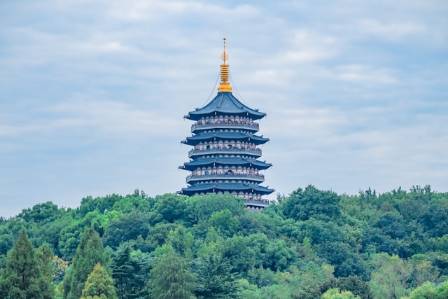
Leifeng Pagoda: A Timeless Landmark by West Lake
Standing on the south bank of West Lake in Hangzhou, Leifeng Pagoda has become one of China’s most evocative and beloved towers.

Top 5 of the Most expensive VW Beetles
When the unassuming Volkswagen Beetle first made its way to Canada, it debuted with an accessible price tag: less than 1,600 US dollars for a brand-new model. Today, the iconic “Bug” has shattered auction records, with a Beetle customized to resemble the famous movie car Herbie selling for a staggering USD 212,500. That’s what you call an extraordinary return on investment.

Five of the World’s Most Beautiful Climbing Locations
From the towering sea cliffs of Tasmania to the limestone karsts of Vietnam, our planet offers a dazzling variety of rock formations for climbers seeking adventure, challenge, and beauty. Australian climber and photographer Simon Carter, who has spent four decades scaling and photographing the world’s cliffs, reveals five of his favorite climbing destinations — breathtaking landscapes that test both skill and spirit.

The Dawn of Invention: Eight of the Oldest Artifacts Ever Found
In the field of anthropology, an artifact is defined as any physical object that shows signs of human modification or intervention. While this can technically include features like a primitive fire pit or a hand-dug trench, the term is most often applied to portable items crafted by ancient hands. In recent decades, archaeological breakthroughs have unearthed objects dating back millions of years, forcing researchers to reconsider the true origins of human ingenuity and social complexity.