Publisering
Desert Camels
Camels have been domesticated for over 3,000 years, and humans continue to rely on them for transport across dry and arid regions. They can carry up to 200 pounds (90 kilograms) while traveling 20 miles (32 kilometers) a day in the desert. Camels are capable of moving as fast as horses, yet they can survive for long periods without food or water. Beyond transportation, humans have used camels for milk, meat, wool, leather, and even dung as a source of fuel.
Alice Morgan
Signatur
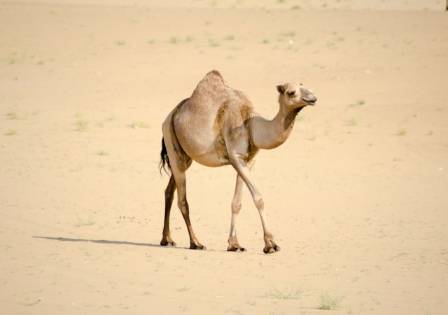
Camels have been domesticated for over 3,000 years, and humans continue to rely on them for transport across dry and arid regions. They can carry up to 200 pounds (90 kilograms) while traveling 20 miles (32 kilometers) a day in the desert. Camels are capable of moving as fast as horses, yet they can survive for long periods without food or water. Beyond transportation, humans have used camels for milk, meat, wool, leather, and even dung as a source of fuel.
Types of Camels
The dromedary camel, also called the Arabian camel, exists today only as a domesticated species, making up about 90 percent of the world’s camels. Bactrian camels have two humps and exist as both wild and domesticated types. Wild Bactrians are generally smaller and leaner, with less hair and smaller humps than domesticated ones.
One Hump or Two?
Remembering which camel has how many humps is simple: Dromedary (D) has one hump, Bactrian (B) has two. Contrary to popular belief, the humps store fat, not water, which provides energy when food is scarce. The size of the hump shrinks when the fat is used, causing it to droop.
Camels can survive for a week or more without water and months without food. They can lose up to 40 percent of their body weight and then drink up to 32 gallons (145 liters) in one session.
Spitting Behavior
Camels are famous for “spitting,” though it’s more like vomiting. They bring up stomach contents and saliva to project at a perceived threat. You can tell a camel is about to spit when its cheeks swell. Despite their size, camels can fall prey to predators like wolves at waterholes.
Habitat and Adaptations
Bactrian camels are native to the Gobi Desert (China) and the Bactrian steppes of Mongolia. They grow a thick, shaggy coat in winter for insulation against freezing temperatures and shed it during the hot summer. They can endure extreme temperatures from -20°F (-29°C) to 120°F (49°C).
Domesticated dromedaries are found across deserts in North Africa and the Middle East. Some feral populations exist in Australia, where camels were introduced in the 19th century.
Camels are well adapted to desert conditions. They have a thin, protective inner eyelid (nictitating membrane) to shield their eyes from sand, long double eyelashes, and nostrils that can close during sandstorms. Their broad, calloused feet spread out to aid walking on sand or snow.
Camels are active during the day, foraging for a variety of foods. Their split upper lip allows them to grasp short grasses and tough plants, even those with thorns or salt content. Occasionally, they may eat fish. Like cows, camels are ruminants and regurgitate their food to chew it again, releasing strong-smelling gases.
At the San Diego Zoo, camels are fed Bermuda and Sudan hay along with herbivore pellets.
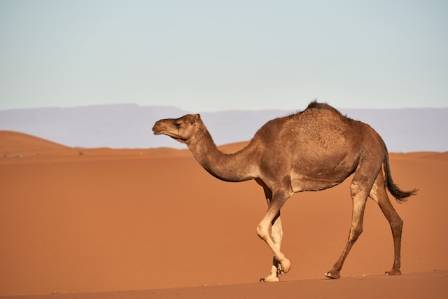
Social Life
Camels are social animals living in herds led by a dominant male. Males removed from herds often form bachelor groups. They communicate through a range of sounds, including groans, bellows, hums, and roars. Mothers and calves hum to each other, and camels greet each other by blowing in faces. Head, ear, neck, and tail positions also convey messages: ears forward indicate alertness, while a curled tail signals submission.
Reproduction
Pregnant females separate from the herd for calving. After a 12–14 month gestation, calves are able to stand and walk within half an hour. At birth, calves have no humps, just small skin peaks topped with curly hair where the humps will grow. Mothers and young rejoin the herd after about two weeks. Calves nurse for 10–18 months, depending on camel type and food availability, reaching full size around age seven.
Conservation
Humans have relied on camels for centuries. In the 1800s, camels were even brought to the U.S. to transport goods in the West. Today, dromedaries remain essential to nomadic communities in the Sahara for milk, wool, and transport.
Bactrian camels, however, are critically endangered. Populations are declining due to hunting, competition with domestic livestock, and habitat loss from mining. Approximately 650 wild Bactrians remain in China and 450 in Mongolia. The Wild Camel Protection Foundation, founded in 1997, established a natural reserve in China to protect them.
Supporting organizations like the San Diego Zoo Wildlife Alliance helps protect camels and wildlife worldwide.
Andre saker du kanskje liker

Comprehensive Guide to Artistic Painting on Feathers
Feathers offer a remarkable and unconventional medium for artists, serving as both a naturally beautiful object and a versatile canvas for creative expression. Whether you are illustrating realistic wildlife or abstract patterns, painting on feathers requires a specific set of techniques to handle the delicate texture of the quills while ensuring a lasting finish.

Dragonfly Watercolor Painting
Painting dragonflies in watercolor brings a sense of lightness, movement, and tranquility to your artwork. This subject works beautifully with watercolor because delicate wings, subtle color transitions, and soft edges naturally benefit from the fluid nature of the medium. Many artists appreciate how slight adjustments in water or pigment can completely transform the final result.

Suggestive Mountions Huts in 7 Areas
Mountain huts, also known as alpine huts, mountain shelters, or mountain lodges, are structures situated in high mountainous regions, typically accessible only by foot. Their primary purpose is to provide food and shelter for mountaineers, climbers, and hikers. These huts are commonly managed by Alpine Clubs or organizations dedicated to mountain recreation.

The Most Important Meal of the Day: Global Breakfast Traditions That Define Cultures
Breakfast is far more than a simple meal to kickstart the day—it is a universal ritual woven into the fabric of cultures worldwide, a reflection of geography, history, and lifestyle. Beyond providing the energy needed for work, school, or adventure, breakfast carries deep cultural significance: it can be a quiet moment of solitude, a lively family gathering, or a quick bite on the go, all shaped by the traditions and values of a region. From the hearty spreads of the Middle East to the light, fresh bites of Mediterranean countries, every breakfast tells a story of identity and community. As we journey across continents, we explore how different nations start their mornings, uncovering the unique ingredients, preparation methods, and cultural meanings that make each breakfast tradition unforgettable.

The Profound Influence of Technology on Your Everyday Life
In the year 2023, technology permeates nearly every facet of our daily existence, ushering in a multitude of transformations across various domains. From the realms of transport efficiency, food accessibility, and healthcare to socialization, productivity, and the ease of learning, technology has left an indelible imprint on our world. It has not only made knowledge more accessible but has also fostered the organic formation of global communities on the internet.

The 10 Most Powerful Classic Muscle Cars
When it comes to high-powered muscle cars and unadulterated American horsepower, Carly Simon hit the nail on the head: these truly were the good old days. The Chevrolet Camaro ZL1 cranks out a minimum of 650 SAE net horsepower. Ford’s Shelby GT500 raises the bar to 760 horses. Still not enough? Dodge’s Hellcat Redeye Jailbreak models push the envelope to a whopping 807 horsepower. All these modern beasts fire up with a single turn of the key (or press of a button), can run 100,000 miles without a tune-up, and deliver fuel efficiency no worse than the 145-horsepower 1982 Camaro Z-28.

Famous Ship Paintings: Exploring the Timeless Charm of Nautical Art (Rewritten & Expanded)
To discuss the history of human civilization is to inevitably confront the significance of ships—a symbol that transcends mere transportation. For millennia, ships have served as lifelines of global trade, facilitating economic prosperity and cultural exchange across continents; yet, they have also been instruments of colonial expansion and the transatlantic slave trade, bearing witness to humanity’s darkest atrocities. This dual nature of ships—their role as agents of connection and conflict—has made them enduring subjects in the world of art. Nautical paintings, or ship paintings, do more than depict the majestic beauty of vessels on the water; they capture the spirit of their eras, preserving stories of exploration, war, survival, and hope. In this expanded exploration, we will delve into the rich history of marine art, examine ten of the most famous ship paintings that have shaped the genre, and unpack the profound symbolic meanings that ships carry in artistic representation. Whether you are an art enthusiast, a history buff, or simply drawn to the allure of the sea, these works offer a window into the complex relationship between humanity and the ocean.

6 Exceptional Artworks of All Time
Throughout history, certain masterpieces have left an indelible mark on humanity. These artworks not only shaped artistic movements but also influenced fashion trends and introduced new styles and artistic values. More importantly, they have served as a wellspring of inspiration for countless individuals, encouraging creativity and innovation.

An Introductory Guide to Floral Painting with Water-Mixable Oils
Transitioning from the delicate nature of watercolors to the substantial world of oil painting offers a unique opportunity to explore texture and depth. While traditional oils are known for their heavy consistency and distinct scent, water-mixable oils provide a versatile alternative that maintains the rich qualities of the medium while allowing for easier cleanup. This guide explores the experimental journey of capturing a botanical scene by embracing the specific strengths of the oil medium.
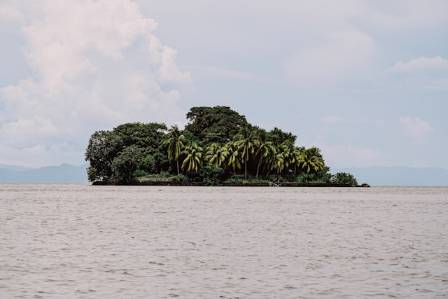
The Top 10 Tropical Islands You Should Consider
When you think of paradise, you likely imagine white-sand beaches, crystal-blue water, and palm trees stretching into the horizon. That’s the vibe of a great tropical island — those places where time seems to slow and the stresses of the world fade away. After spending years travelling and exploring many such islands, this list compiles Matt’s favourite and best tropical islands across budgets, travel-styles and interests.